
Emerald Fennell succeeds at nothing quite so much as she does at creating controversy in the minds of people that view her films. With Promising Young Woman she nabbed a Best Director nod at the Academy Awards, as well as a Best Adapted Screenplay win, even when many viewed her movie as either going too far, or found themselves of the view that she did not going far enough. Then in 2023 she created even more of a stark difference between fans with the farcical tale of a wealthy family meeting an untimely end in Saltburn. To go into the crowd response to that film is to give much away, so we’ll leave it at “controversial indeed”. Then when the first trailer for her rendition of the classic Emily Bronte novel Wuthering Heights hit, the two sides of the internet war that she seems to constantly be found in the middle of hit a fever pitch.
“Wuthering Heights” (quotation marks and all) marketed itself as a steamy corset ripper, the kind you find in your great aunt’s house after she’s passed that has a sailor’s bare chest imprinted on the cover. The trailer and marketing rode the ever growing wave of modern romance books, and used a classic to do so, as the internet fell into a state of turmoil. One side concerned itself with the treatment that a beloved classic was getting in the modern era, the other excited to find a foothold in both mainstream popular culture, as well as a receive a piqued interest in classic literature. As the dust has settled it does feel like perhaps both sides were a little jumpy with their mad grabbing at who they expected the victor to be. Neither does it feel like a premonition of “the illiteracy crisis in America” nor does it really feel as risqué as fans were hoping for. It feels more like it’s trying to open the door of the cinema to a broader audience, to let people who don’t have long winded conversations about Juliet Binoche or Sidney Lumet once a week get a bucket of popcorn and watch two movie stars kiss. It is incredibly successful at that aim.
The lead characters Catherine (Margot Robbie) and Heathcliff (Jacob Elordi) are raised together and forge a bond. At first of friendship, and then as these things go, it becomes something more. As they grow older the difference in their class is felt, and is seemingly an insurmountably vast gulch to overcome. Catherine begins to attempt to woo the wealthy neighbor Edgar (Shazad Latif), leaving Heathcliff to make his fortune elsewhere, reinventing himself over years. The film does partake in the occasional lazy trope, the most glaring being Heathcliff hearing the first of the conversation wherein Catherine confesses her desire to marry Edgar, but not the latter half where she confesses she cannot because of her love for Heathcliff.
It is important to note that the description of Heathcliff in the book is one of racial ambiguity. His dark skin is described, as well as his standing being such that he could never be with Catherine. It is often felt, even in this film, that that subtext is in the lines of dialogue plucked from the book. The audacity for a non white man to consider himself worthy of pursuing a white woman is plain in their speech, even as they are talking about Australian born white boy Jacob Elordi. It is not simply about representation, but about being true to what this story is having a dialogue about. The script is explicit in its desire to discuss race and to ignore it is to whitewash it. It’s the kind of gaffe that will keep Emerald Fennell skeptics going for a long while.
The film is in the end, no more than the sum of its parts. It’s just good that it has so many parts to cobble together. Wickedly devious performances from Martin Clunes as Catherine’s father, and the work from Alison Oliver playing Isabella is exactly the kind of scene stealing a rom com like “Wuthering Heights” needs. Her completely unhinged portrayal of a woman full of jealousy, desperate to outwit and outmatch Cathy at every turn is both hilarious and tragic in equal parts. She waxes poetic about ribbons for entirely too long, has an absurd dog, and crawls around on all fours in a state of psychosis. She robs the picture blind and I can only hope she enjoys the spoils to her heart’s content.
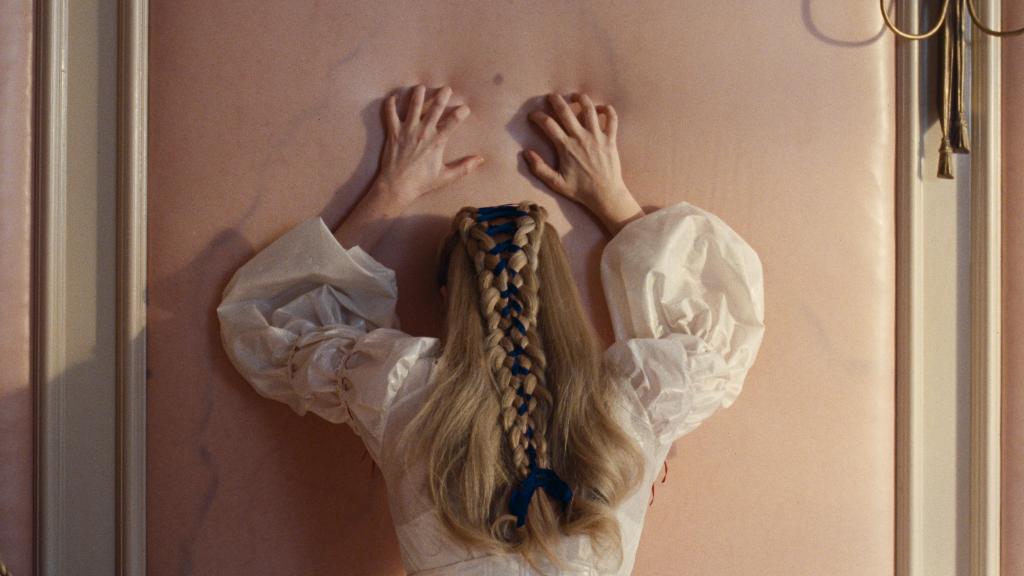
The performances are set in a backdrop of gothic yearning. The house that Cathy and Heathcliff grow up in is shingled in black tile, an arch appearing at its base. The home that Cathy creates with Edgar is the same color and texture as that of her skin, down to a mole on her cheek. The fog rolls over the hills of Scotland as Heathcliff and Catherine stand on two sides of a ruined castle. The camera centers itself on these sets letting characters move in rhythm in a way that might make Wes Anderson crimson with jealousy. The shots of “Wuthering Heights” are a worthy addition to Fennell’s body of visual language.
It may seem unfair to refer to “Wuthering Heights” as a rom com, as the original work bears so much weight over not only romance novels, but literature at large. But it doesn’t feel like it’s trying to be more than that, and in its journey to accessibility it finds its stride. It is sexy, and funny, and gorgeously shot. The Charli XCX soundtrack keeps it fun and fresh and unique. It keeps to the letter of the text when it absolutely must, and ventures off of it when it feels the need to set itself apart. Even when it finds itself in some of the most tragic parts of the tale it is a rom com. By setting self seriousness aside it has found success, even as it does so with the kind of technical craft we expect from the old masters.
4/5
 The Joey Awards