
Anyone that’s viewed The Rehearsal understands Nathan Fielder’s intense fascination with discovering and recreating truth. In the program he has subjects act out their wishes and worries on comprehensively recreated sets alongside actors playing out the roles they most need to balance out the reality. It is at once, both absurd, and can often land on real findings. Particularly in season two when Nathan spends a multitude of time trying to understand how and why airplane crashes occur, we see his dedication is at least equal parts comedy, as it is striving for something that’s real.
And now he has teamed up with documentary film maker Lance Oppenheim to spend thirty days in Elizabeth Holmes house before she goes to jail for lying to investors. The pairing right out of the gate is an odd one. Holmes’ goal is allegedly to appeal to the court of public opinion and reclaim her good name, but landing on Nathan Fielder as one of the voices of that narrative is a choice to be sure. Regardless Holmes continues to claim innocence and states that at no point did she tell a lie about her product or her company Theranos. Getting into all of the beats of the 3 hour long documentary would take more time than any of us have room for, so we will instead focus on the energy of the project, and the ways in which it finds success.
Fielder has obviously continued to grow as an artist, from his days of the absurdist comedy show Nathan For You, to The Rehearsal, and now to You Can See Everything. He has a penchant for digging in on the important stuff, and refusing to back down when his subjects try to bully him in one direction or another. He does this in a way too, that doesn’t leave people with hurt feelings. He has a gentle energy that allows both Holmes and her husband Billy Evans, to feel comfortable with him, even when he’s asking pressing questions about how much truth there really was in the products of Theranos.
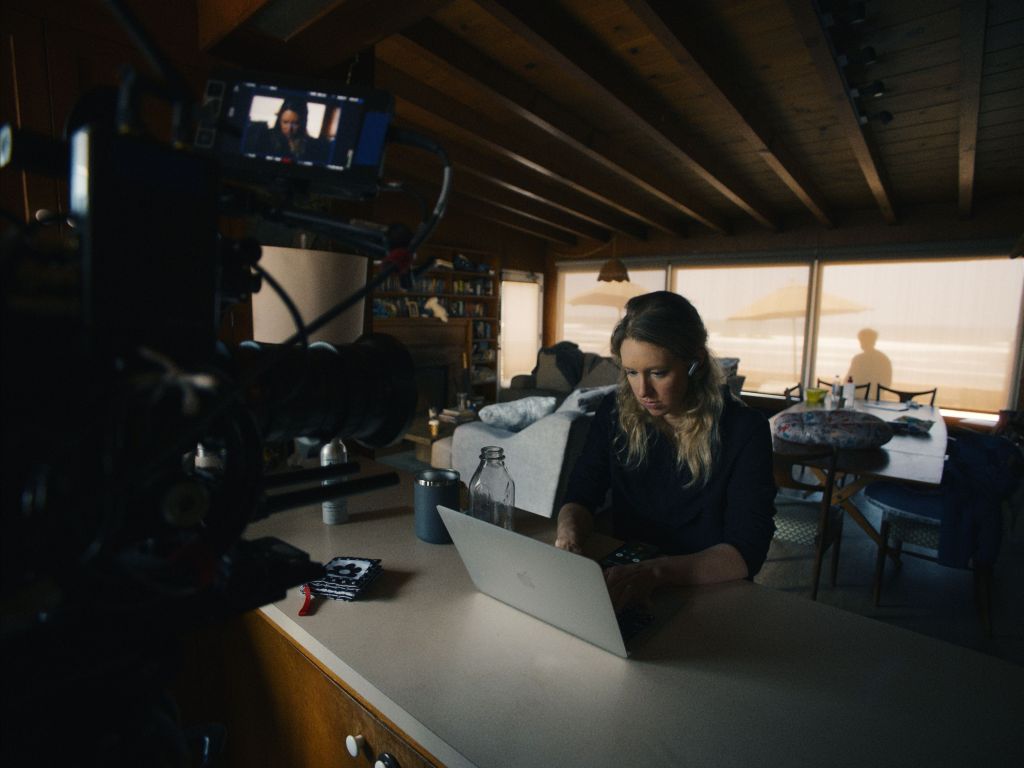
Lance Oppenheim for his part brings the visual panache that we’ve come to expect. Anyone that has seen Primetime will recognize the determination to fill the screen with a human face as it’s wrestling with how to navigate this stressful situation. From Fielder asking Holmes “Are you being real with me right now?” to Billy Evans intensely staring down Nathan as he’s pressing Elizabeth’s dad for information on her past, Oppenheim and Director of Photography David Bolen collab to showcase the facial features of every person that comes across their lens.
There are some hanging chads with this movie, moral issues that one could bump up against. While it doesn’t necessarily exonerate Holmes, it does cast her in a more favorable light. And we should work to humanize criminals, and there are massive issues with a justice system that robs a mother from her two small children. Although I would say I have more sympathy for someone being arrested for dealing drugs, or petty theft than I do for Elizabeth Holmes. Countless people used this product, and were given incorrect health information. Lying to investors is not something I have an urge to get up in arms about, but it does seem like Fielder and Oppenheim could’ve taken some screentime to talk to someone who was directly effected by Holmes claim that the product worked, or even talk to experts about what exactly was wrong with it. Instead we are left with only one person who really had the knowledge of the situation, and she flatly expresses that she communicated the best way she knows how.
The thing that You Can See Everything really gets home is the quest for truth, and the unknowability of that truth. It’s hard to tell whether Holmes and Evans are lying at any point. And the subjectivity of Fielder himself is called in to question by the end of the feature for a very undestandable reason. He spent a full thirty days living with her and working with her, the two clealry forged a real substantive relationship. Fielder knows this and highlights it. The idea of subjective journalism simply does not exist, let alone subjectivity of any kind across other fields. It is humanizing, and fascinating, breathtaking, and also has at least one Grade A fart in the film. A truly spectacular feat.
4.5/5

